
Key Takeaways
- Paragliding Bali Timbis Beach offers gentle sea breezes and breathtaking sweeping shoreline views.
- April to October is Bali’s optimal paragliding season, ensuring clear skies and ideal wind conditions.
- Top Bali paragliding spots include Nusa Dua Beach, Uluwatu Cliffs, and Candidasa Coastline.
- Tandem flights with instructors make Bali paragliding accessible, requiring no prior experience.
For those seeking thrilling paragliding experiences, both Bali and Lombok present unique coastal landscapes and favorable wind conditions. Bali, known for its established sites at Paragliding Bali Timbis Beach and Uluwatu Cliffs, contrasts with Lombok’s emerging spots like Merese Hill, offering different but equally exciting aerial adventures.
Overview of Paragliding in Bali
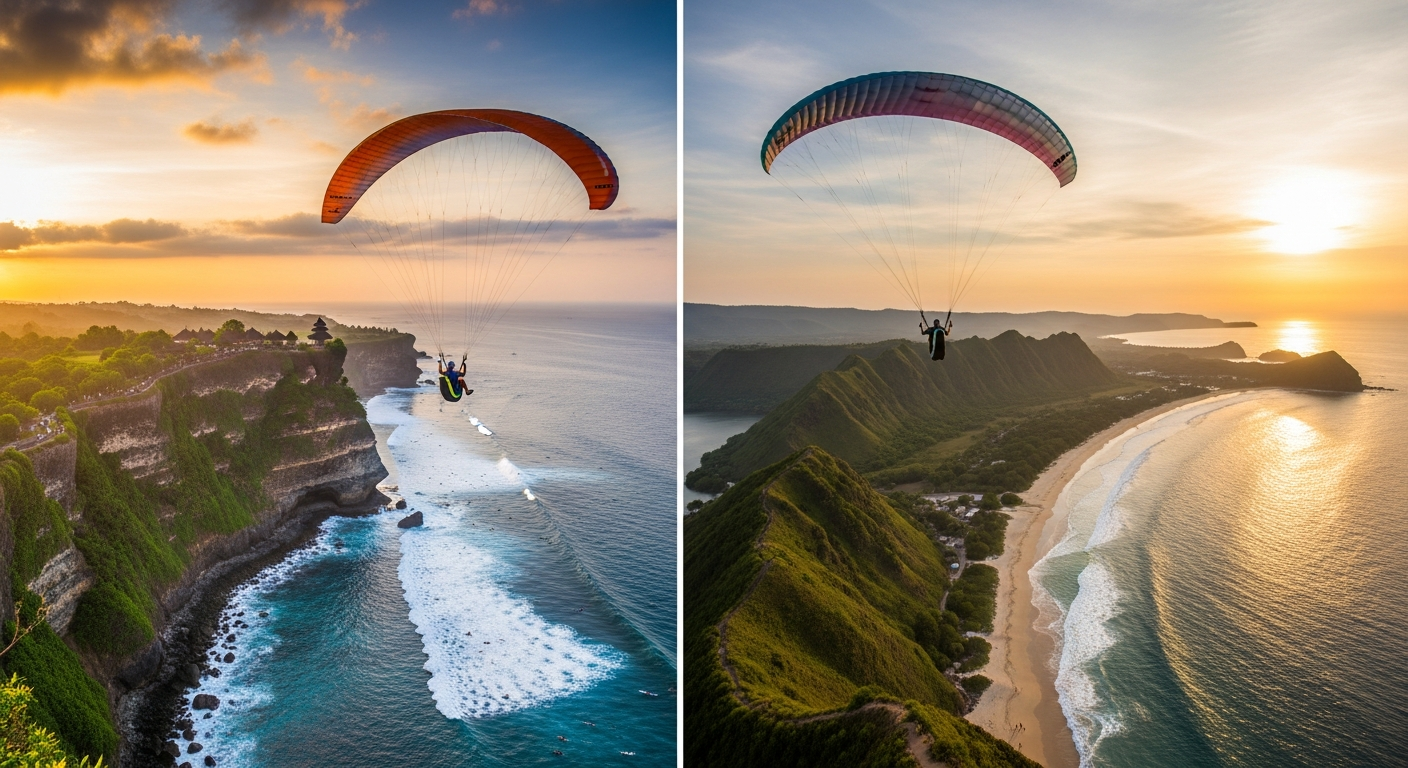
Bali is renowned for its picturesque paragliding spots, with Paragliding Bali Timbis Beach leading the charge. The beach is famous for its gentle sea breezes, making it ideal for both beginners and experienced paragliders. The location offers expansive views of the coastline, perfectly complemented by the clear skies of the dry season, from April to October. As paragliders glide over Timbis Beach, they are often treated to the sight of turquoise waters meeting sandy shores, a visual that is quintessentially Balinese.
Other notable paragliding locations include Nusa Dua Beach, where the winds are particularly favorable for long flights, and the Uluwatu Cliffs, which provide a dramatic backdrop for takeoff. These sites are well-facilitated with operators who are adept at ensuring safety and providing tandem flight experiences, making Bali a top choice for paragliding enthusiasts. During the peak paragliding months, these sites become hubs of activity with tourists and locals alike eager to take to the skies.
Paragliding in Lombok: Emerging Destinations
Lombok, while less commercialized than its neighbor, is gaining recognition for its paragliding opportunities. The island’s natural terrain, particularly around Merese Hill and Kuta Beach, offers excellent conditions for the sport. Merese Hill provides paragliders with a panoramic view of the southern coastline, coupled with consistent wind patterns that are conducive to smooth flights. The lush greenery and rare wildlife sightings along the hillsides add an element of adventure to the paragliding experience.
The wind conditions in Lombok are optimal from May to September, aligning with the island’s dry season. The relative calm and serenity of the environment make Lombok a compelling alternative for paragliders looking to explore new terrains. The local operators are gradually improving infrastructure and safety protocols, ensuring a reliable experience for visitors. Additionally, the island’s commitment to eco-friendly tourism is reflected in their sustainable practices, which are a draw for environmentally conscious adventurers.
Comparing Wind Conditions: Bali vs. Lombok
wind conditions, both Bali and Lombok offer favorable environments, albeit with some differences. Bali’s prime paragliding season extends from April to October, with consistent wind speeds that facilitate easy takeoffs and landings. The island’s infrastructure supports a thriving paragliding community, with numerous operators ensuring safety and compliance with international standards. The steady trade winds in Bali are considered ideal, as they allow for longer, more stable flights that delight thrill-seekers.
In contrast, Lombok’s wind conditions are slightly more variable due to its less developed paragliding infrastructure. However, from May to September, the island experiences steady winds that make it suitable for paragliding. As Lombok continues to develop its offerings, it presents a viable alternative for those seeking less crowded skies and unique landscapes. The local government has been investing in wind monitoring technology to better predict and harness these natural wind currents for maximum enjoyment and safety.
Scenic Coastal Views: Bali and Lombok
Bali’s coastal vistas are known for their diversity and beauty. Paragliders in Bali can enjoy views of iconic landmarks such as Mount Agung, which serves as a striking backdrop during flights. The island’s varied coastline, from the busy beaches of Nusa Dua to the steep cliffs of Uluwatu, offers a visual feast that is hard to match. The dramatic ocean waves crashing against the cliffs of Uluwatu are a particular highlight for those gliding above.
Lombok, on the other hand, provides a different kind of beauty. The island’s coastline is less developed, offering views that are more natural and untouched. From the air, paragliders can witness the rugged beauty of Lombok’s beaches and the green hills that roll gently into the sea. This aspect of Lombok is particularly appealing to those who appreciate a more rustic and unspoiled landscape. The chance to spot local marine life, such as dolphins and turtles, adds another layer of excitement to the flights over Lombok’s notable waters.
Pricing and Accessibility
Paragliding in Bali is generally well-priced, with tandem flights ranging from USD 80 to USD 150, depending on the location and duration. The island’s extensive network of operators and well-established tourism industry make these experiences easily accessible, with most sites offering transportation and equipment rental within the package. Many operators also offer combined packages with other activities, such as snorkeling or cultural tours, for those wanting to make the most of their visit.
In Lombok, pricing tends to be slightly lower, with tandem flights costing between USD 60 and USD 120. The emerging nature of the sport on the island means fewer crowds and a more personalized experience, though it may require a bit more effort to reach the takeoff points, as some areas lack paved roads. Despite this, the charm of the journey itself, often through lush jungles and quaint villages, is a part of the unique experience that Lombok offers.
Safety Considerations
Safety is a paramount concern for any paragliding adventure. In Bali, established operators adhere to strict safety guidelines, ensuring that participants are well-informed and equipped with the necessary gear. The tandem flights are conducted by experienced pilots who prioritize passenger safety throughout the flight. Regular maintenance of equipment and the use of modern, reliable gear contribute to the high safety standards maintained on the island.
Lombok, while still developing its paragliding sector, is making strides in improving safety standards. Operators are increasingly adopting international best practices, and the local government is supportive of initiatives aimed at enhancing safety protocols. It remains crucial for visitors to choose certified operators to ensure a secure and enjoyable experience. Local communities also play a role by participating in training sessions to understand and support safety measures, fostering a culture of safety awareness.
Cultural Experiences to Complement Paragliding
Bali is not only a hub for adventure sports but also a cultural region. After paragliding, visitors can explore traditional Balinese villages, witness intricate dance performances, and visit historic temples like Tanah Lot and Uluwatu Temple. The rich cultural notable of Bali offers insights into the island’s heritage, with local festivals and ceremonies often providing a unique experience that complements the thrill of paragliding.
Similarly, Lombok offers its own cultural treasures. The Sasak culture, predominant in Lombok, is accessible through visits to traditional Sasak villages where one can observe local crafts such as pottery and weaving. The island’s cultural landscape is enriched by its distinct culinary offerings, such as the spicy Ayam Taliwang, which is a must-try for food enthusiasts. Engaging with the local culture provides paragliders with a deeper understanding of the islands beyond their natural beauty.
FAQs
Q? What is the best time of year to go paragliding in Bali and Lombok? A: The best time for paragliding in Bali is during the dry season, from April to October, when the weather is clear, and wind conditions are predictable. For Lombok, the optimal period extends from May to September, coinciding with its dry season.
Q? Can beginners try paragliding in Bali or Lombok? A: Yes, both Bali and Lombok offer tandem flights with professional instructors, making it accessible for beginners. No previous experience is necessary, as the instructor handles the equipment and ensures a safe and enjoyable flight.
Q? Are there any restrictions on taking photos or videos during the flight? A: Participants are allowed to bring cameras or GoPros to capture their flight, provided that the devices are securely attached. This ensures that they are not lost during the flight, allowing you to safely record your experience from the sky.
For wider arrangements, our partner baliluxurytransport can coordinate end to end.
Planning something bigger across Indonesia? For premium coordination visit rajaampatyachtcharter.
Explore all baliparaglidings.com options and plan your trip.
See also: How to Plan Your First Paragliding Trip to Bali in 2027: Step-by-Step Guide for Tourists, Bali Paragliding Cost 2027: Exact Price Breakdown for Solo vs. Tandem Flights from Timbis.